News


Löschen_Call for nominations: Prix de Quervain 2026 for Polar Research
The Prix de Quervain 2026 will be awarded for outstanding research conducted in, or originat-ing from, the two polar regions, across all scientific disciplines. Eligible to participate are early career researchers who have completed their master's, doctoral or postdoctoral work after 15 March 2024 at a research institution in Switzerland. Submissions will be evaluated based on their scientific significance, originality, relevance to science and/or practice, and the overall quality of presentation. The evaluation process will take into account the different qualification levels and the academic age of the applicants.
Image : SKPHCall for nominations: Prix de Quervain 2026 for Polar Research
The Prix de Quervain 2026 will be awarded for outstanding research conducted in, or originat-ing from, the two polar regions, across all scientific disciplines. Eligible to participate are early career researchers who have completed their master's, doctoral or postdoctoral work after 15 March 2024 at a research institution in Switzerland. Submissions will be evaluated based on their scientific significance, originality, relevance to science and/or practice, and the overall quality of presentation. The evaluation process will take into account the different qualification levels and the academic age of the applicants.
Image : SKPH
SSHL Poster Award 2025
Junu Marhajan (University of Geneva) and Fernando Gutiérrez (University of Neuchâtel) won the SSHL Poster Award for their posters presented at the Swiss Geoscience Meeting 2025. Congratulations!
Image : Edith Oosenbrug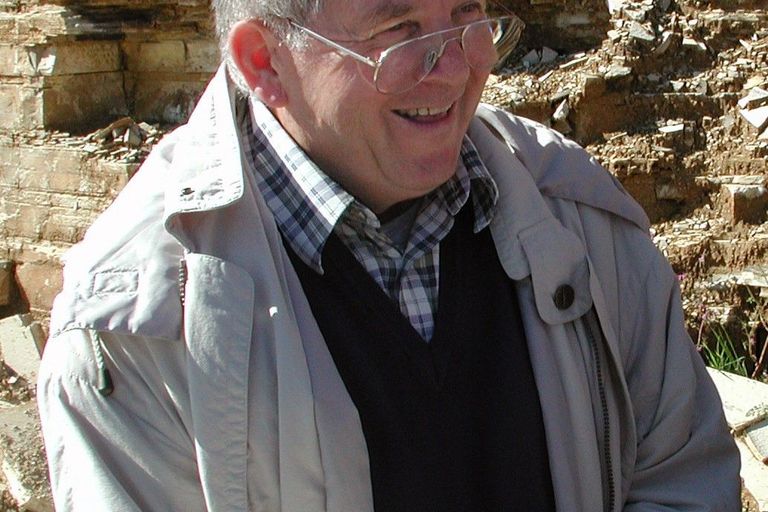
Zum Gedenken an Hans Rieber (1934-2025)
Hans P. Rieber, Professor für Paläozoologie an der Universität Zürich (1976 – 2001) und ETH Zürich (1976 – 1999), geboren am 2. April 1934, ist am 4. November 2025 in Esslingen verstorben.
Image : Heinz FurrerGlaciers de Suisse
Les glaciers caractérisent les Alpes suisses. Leur recul exerce une influence sur le paysage et le tourisme, implique des dangers naturels, réduit la quantité d’eau disponible en été et se ressent jusqu’à l’océan. L’ampleur du recul des glaciers des Alpes et leur disparition totale dépendent du changement climatique et, par conséquent, de la protection du climat à l’échelle mondiale. La présente fiche d’information résume l’état des connaissances sur la fonte des glaciers ainsi que les répercussions sur la société et présente des options d’action.